


What is the Confidence Cycle?
I wonder if you’ve ever experienced a moment like this.
One morning, a brilliant idea suddenly pops into your head – for instance, you want to write an article about the ‘creator’s confidence cycle.’ You think it’s absolutely fascinating; looking back at your own creative journey, all those ups and downs perfectly confirm this pattern. You excitedly rush to discuss it with AI, chat with friends, and then, full of confidence, you sit in front of your computer and type the first line.
One line, two lines…
Suddenly, your fingers slow down on the keyboard. A voice echoes in your mind: “These obvious truths, even I can think of them. Don’t others have brains to figure it out themselves? Is it really necessary to write this down?”
You quickly argue with yourself internally: “Build in public! Open creation inherently involves repetition. Maybe some people already know, but it can definitely help those who are deeply stuck and don’t even realize it!”
You barely manage to counteract the anxiety with this line of reasoning and continue writing. But once doubt takes root, it doesn’t easily disappear.
When you’re halfway through the article, you stare at the screen, and a huge sense of emptiness washes over you: “What garbage am I even writing? This is illogical, dry, and boring. Public creation doesn’t mean you can just ‘dump crap’ on the internet!” The seeds of doubt begin to sprout and grow wildly. All those comforting words from before completely lose their power. The more you look, the more superfluous you feel, even believing that in this excellent internet world, you yourself are an unnecessary existence.
But in the end, you don’t press that ‘delete all’ backspace key.
Perhaps it’s unwillingness to give up, or some damned sense of responsibility, but you push through with the thought of “I’m trash,” and continue writing in a self-deprecating manner.
Doubt bore bitter fruit, but you chose to swallow it and keep typing. Curiously, with every word you typed, that plant of doubt began to wither. You slowly realized: things weren’t as bad as you imagined. You could still think, still create, you were still alive.
Finally, when you typed the last period, looking at the article that was much longer than any middle school final exam essay, a huge sense of pride swelled in your heart. You looked at this “garbage,” and suddenly it seemed alright. In that moment, you just wanted to show it to the whole world, loudly declaring: “I made it! I’m not a coward!”
Welcome to the creator’s destiny – this is the “confidence cycle.”
The Scientific Principles Behind the Confidence Cycle
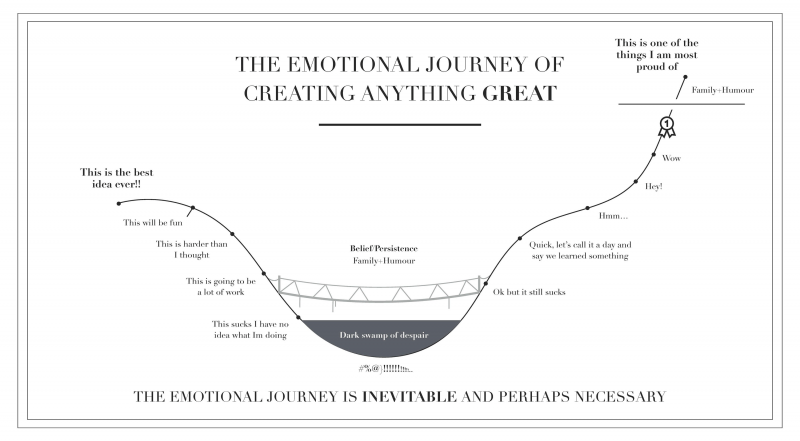
I don’t know if the above words resonated with you, but when I wrote that little story above, I certainly got emotional. Actually, this is a very scientific phenomenon, and others have even explained it long ago nothing new under the sun, huh…. Of course, since I’m in the mood, I’ll try to explain it in my own words. The following are results I found after asking AI and looking through various encyclopedias. Let’s take a look at the relevant scientific principles.
The Eureka Effect (Aha! Moment)
Eureka effect, also known as Aha! moment or eureka moment, refers to the moment when a person suddenly understands a problem or concept that was previously incomprehensible. At this point, a previously unsolvable problem suddenly becomes clear and obvious. This shift from not understanding to spontaneous comprehension and realization is often accompanied by joy, satisfaction, and exclamation1.
When you first start creating, which is usually when you’ve decided what you’re going to do, you feel incredibly confident. Because you’ve set your goal, you feel like you see a bright future beckoning. You’ve just broken through a concept, and it’s the peak of the Eureka moment, a very comfortable experience for a creator. At this point, you might even feel that the world is quite beautiful, and wanting to share it with the whole world is precisely to share that beauty.
The Taste Gap and Semantic Satiation
The Taste Gap: Quoting American media personality Ira Glass, if you think your work is bad, it’s not because your ability has declined, but because your “taste” has always been high. Your vision has outpaced your hands, or you could say you have champagne taste on a beer budget (literally “eyes high, hands low”).
Semantic Satiation:2 A psychological phenomenon where, after staring at a character or a word repeatedly for a long time, a person may suddenly find that they no longer recognize that character or word.
When these two are superimposed on your creative work, it means that as you develop, you increasingly find a growing gap between what’s actually produced and what you imagined. At the same time, because you’ve been working on the same creation, you also fall into a kind of creative satiation, similar to semantic satiation. After repetitive creation, you increasingly look down on your own project, and with the taste gap added on, it’s inevitable to fall into negative emotions.
Imposter Syndrome
Imposter Syndrome:3 Also known as fraud syndrome, people with imposter syndrome are unable to attribute their success to their own abilities and constantly worry that one day others will discover that they are actually frauds. They firmly believe that their success is not due to their own efforts or abilities, but rather to luck, good timing, or others mistakenly thinking they are highly capable and intelligent. Even when real-world evidence indicates that they do possess excellent talents, they still believe they are merely imposters and do not deserve their success.
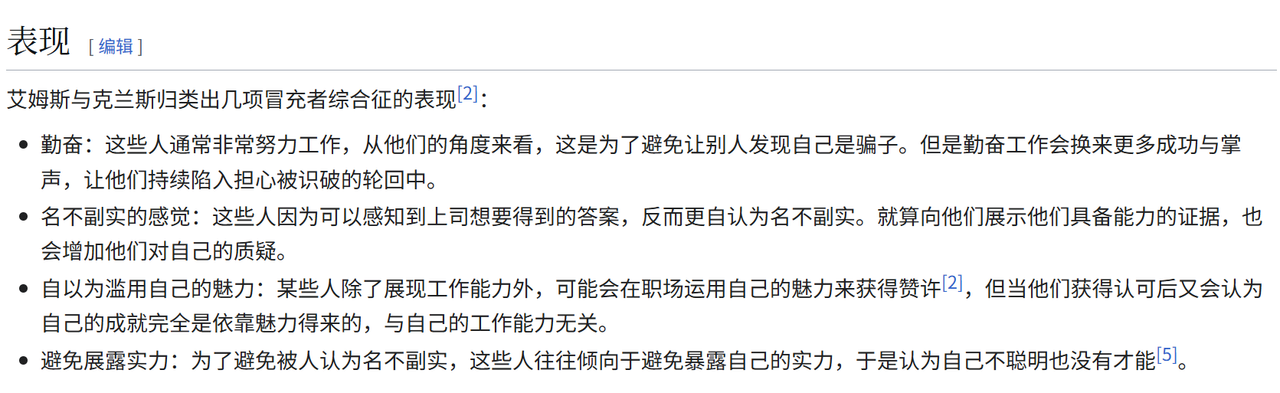
When you enter your worst state, imposter syndrome makes you feel like you really are a fraud, not someone great, just an insignificant nobody, making you even more afraid to show yourself. At this point, if you choose to give up, it will truly meet your expectations, meaning, self-doubt wins…

Next episode, Northward!
How to Successfully Navigate the Cycle
To be honest, I really wanted to just copy other people’s research conclusions, because they’re truly comprehensive, and I myself got caught up in the story I was writing… But since things have come to this, I’ll just keep writing like this.
There’s a common phenomenon in long-distance running – usually, when you hit the third or fourth kilometer, your mind and body feel the worst. As an amateur runner for two and a half years, I’ve naturally experienced this many times. But as long as you ignore what your mind is thinking and just mechanically keep your legs moving, push past that critical point, and it actually gets easier afterward.
It’s the same in creation. As long as you’re still creating, it means you’re still going through that cycle. So, once you’ve reached the darkest point, only light remains afterward. Persistence4 is victory! Victory!

Besides gritting your teeth and persevering, there’s one more crucial thing: That is, don’t overestimate yourself, hey! You don’t really think what you create has some world-changing magic, do you? In reality, it’ll most likely be ignored after it’s done… With that mindset, just keep working on it in a self-deprecating way! That way, if there’s an unexpected fruit of victory, it’ll be especially sweet. And even if it does turn out as expected, you yourself will still be stronger than you were before finishing it! After all, they say you should compare yourself to yourself, right? Being able to surpass yesterday’s self is already great!
Epilogue
Ehh, let me see how many words I’ve written… Holy cow, over two thousand words, I’m amazing, hahaha!
I wish everyone who reads this, may your future creations be divinely inspired: paintings effortlessly perfect, music heavenly, videos hit millions of views, and games fulfill your dreams! I hope this article helps you. I’m Amiya_desi, and I’ll see you in the next interesting discussion!
Feel free to discuss any interesting suggestions or topics in the comments! This is my first time writing such a long article, so please point out any shortcomings. Every comment you leave is a treasure!
Footnotes
-
Quoted from Eureka effect (Wikipedia) ↩
-
Excerpted from Semantic Satiation (Wikipedia) ↩
-
Excerpted from Imposter Syndrome (Wikipedia) ↩
-
As long as you’re still creating, observing, and willing to adjust, the darkest phase isn’t the conclusion. What follows might not be a huge success for your work, but it could be that it finally gets better, you trim it down to completion, or you realize where you should stop. Persistence isn’t stubbornly sticking to the current plan, but rather not immediately judging a low point as your own failure. ↩
Some information may be outdated